


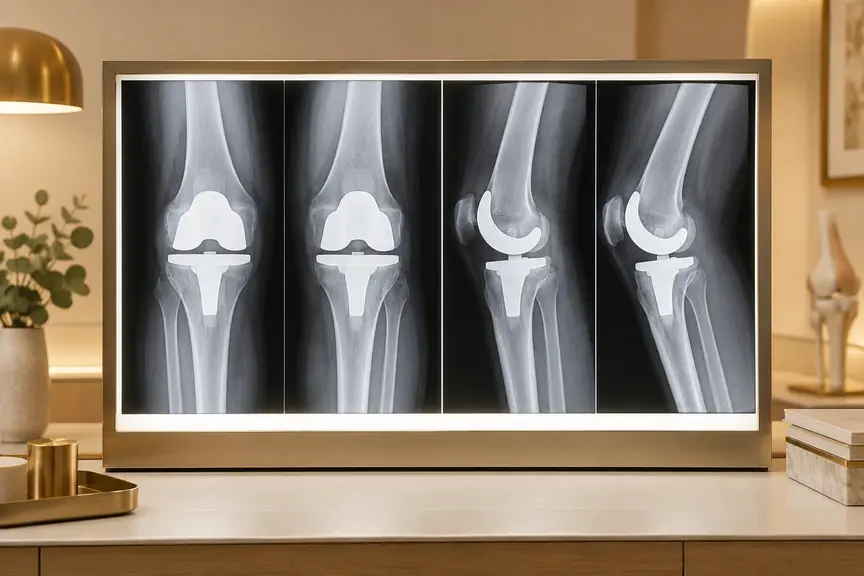
What is knee replacement surgery?
A knee replacement resurfaces the worn parts of the knee with durable metal and plastic components, which eases the pain and stiffness of arthritis. It can be a partial replacement for one worn area, or a total replacement where wear is more widespread. Mr Mark Edmondson tailors the choice to your knee, your X-rays and your goals. The new surfaces are shaped to respect your natural alignment, so the joint feels stable when you walk, climb stairs or stand from a chair.
This is one of the most commonly performed operations in the country. National guidance from NICE (NG157, primary joint replacement of the hip, knee and shoulder) sets out standards for assessment, surgery and rehabilitation, and Mr Mark Edmondson’s practice follows these principles.
Is knee replacement surgery right for me?
Surgery is usually considered when knee pain limits your walking, sleep or independence, and when injections or physiotherapy no longer help. The decision is rarely about age alone. Your activity, the pattern of wear and your goals shape the timing, and some people are advised to wait rather than operate too soon.
- Signs that a consultation may be worthwhile include:
- Pain that wakes you at night or persists at rest.
- Walking distance that keeps shrinking, or reliance on a stick.
- Stiffness, swelling or a knee that gives way on uneven ground.
- X-rays showing established arthritis, with little response to non-surgical care.
Not every painful knee needs a replacement. Meniscal tears, loose bodies and some mechanical problems may be better suited to knee arthroscopy, and weight management, strengthening work and pain relief remain important first steps. If your hip is also involved, Mr Mark Edmondson can advise whether hip replacement surgery should be considered first.
What does surgery involve?
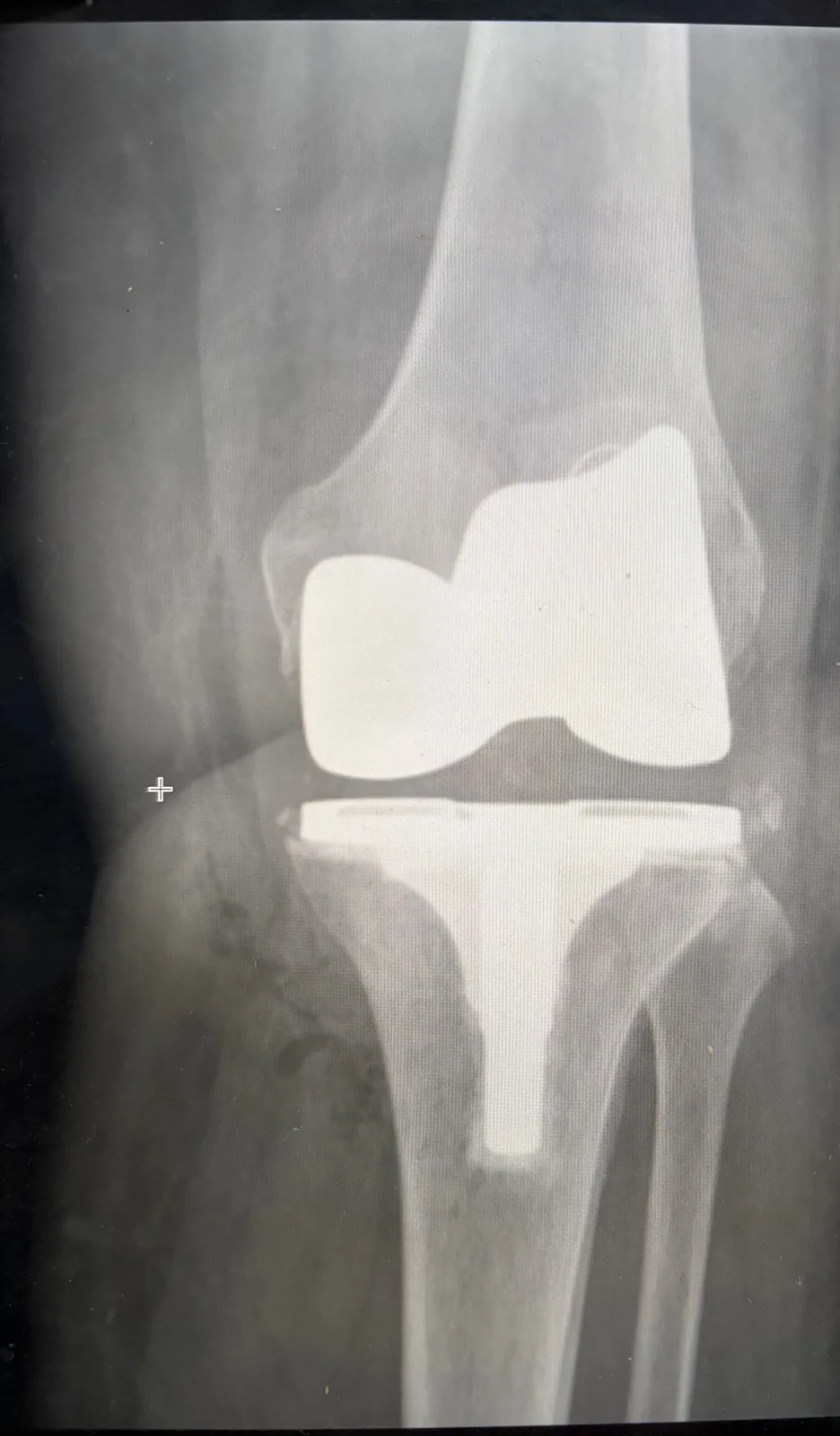
During surgery, the surgeon removes the damaged cartilage from the end of the femur (thigh bone), top of the tibia (shin bone) and the patella (knee cap). The end of the femur is resurfaced with a metal femoral component/prosthesis, as is the top of the shin, this then forms the main part of the new knee joint. The patella is resurfaced to replace this joint (patellofemoral joint) thus replacing all the worn moving parts of the knee allowing the joint to move smoothly without pain. These components are held to your bone with cement.
Most people are admitted on the morning of surgery. A knee replacement usually takes around one to two hours, under a regional (spinal) or general anaesthetic, the choice made with the anaesthetist after assessing your health. Many patients stand and take a few steps with support on the same day, helped by an enhanced recovery plan that combines careful anaesthesia, early physiotherapy and simple pain relief.
Before you go home, the team will check your wound, your walking and your pain control. You will be given exercises, a plan for blood clot prevention and clear contact details in case you have concerns.
Will I need physiotherapy?
Most people can bear weight on their leg soon after the operation and should be able to walk confidently without crutches within six weeks. For the first 2 weeks the focus is on minimizing swelling and pain (ice is helpful in this phase), improving range of motion (aiming for 0-90 degrees bend). From 2-6 weeks focus continues to be increasing the range of motion and developing strength in the surrounding muscles, and improving balance. Using an exercise bike from two weeks onwards is encouraged.
You will also be advised to arrange to see a physiotherapist so that you can begin to follow a rehabilitation programme that will help you return to fitness as soon as possible.
Will the metal in my knee set off a metal detector?
Knee replacements may set off airport security detectors but in most cases, you won’t need to go into great detail about your surgery with the security staff; many people have had some type of surgery involving a metal device and a brief explanation should be enough.
Your Recovery, Week by Week
Day 1
Standing and stepping with support the same day. You'll be shown how to walk using crutches, which you may need for up to six weeks.
Weeks 1-2
Walking indoors, bending practice and wound review. Swelling is often at its worst around week 1; focus is on minimising swelling and pain with ice.
Weeks 4-6
Driving again and back to desk work for those with desk-based jobs. Manual workers may need up to three months to return to normal.
Months 3+
Golf, cycling and swimming are usually fine; impact sport discussed individually. Your knee replacement should continue to improve for up to a year after surgery, sometimes longer for younger patients.
What Are the Risks of Surgery?
- Complications following knee replacement surgery are rare. However, they can include:
- Infection: The chance of infection is less than 1% and can usually be treated effectively with antibiotics. Usually only the skin is affected, but if bacteria get into the knee itself then it may be necessary to have a further operation to wash it out with saline solution and give stronger antibiotics via a drip. On very rare occasions it may be necessary to remove the knee replacement completely to allow the bacteria to be treated. It is then re-replaced, either during the same operation or after an interval of 4-6 weeks.
- Deep vein thrombosis (DVT): The risk of this is less than 1% and is unusual if you move around as much as possible after surgery. You will be given blood thinning injections to reduce this risk and you will be advised to wear compression stockings for up to 2 weeks after surgery. Symptoms of DVT include pain, swelling, warmth and redness of the calf (however, thigh and knee swelling are normal after knee replacement surgery).
- Swelling: Swelling and bruising around the knee joint and in the thigh and knee is common after knee replacement surgery. The swelling may feel tight and uncomfortable.
- Stiffness: Most people experience stiffness initially after the operation, but this will improve with exercise and physiotherapy.
- Nerve damage: Small nerves that supply sensation to the skin near the operation site can be damaged leading to scar numbness. Injury to the major nerves supplying the muscles of the leg is a very serious complication but fortunately extremely rare (less than 0.2%).
- Wear and loosening: Modern knee replacements are expected to last at least fifteen to twenty years. However, over time the artificial knee may wear or loosen and if this happens, a further procedure to change the implants (revision surgery) may be necessary. However, huge advances in the field of revision knee surgery mean that in most cases the outcome is good.
- Fracture: This is rare, occurring in around 1% of cases. This will be noticed intraoperatively and treated appropriately. Rarely small fractures are picked up on the post op xray, which is routinely performed the next day after surgery, generally these are treated with changing the amount of weight you are allowed to put through your operated leg.
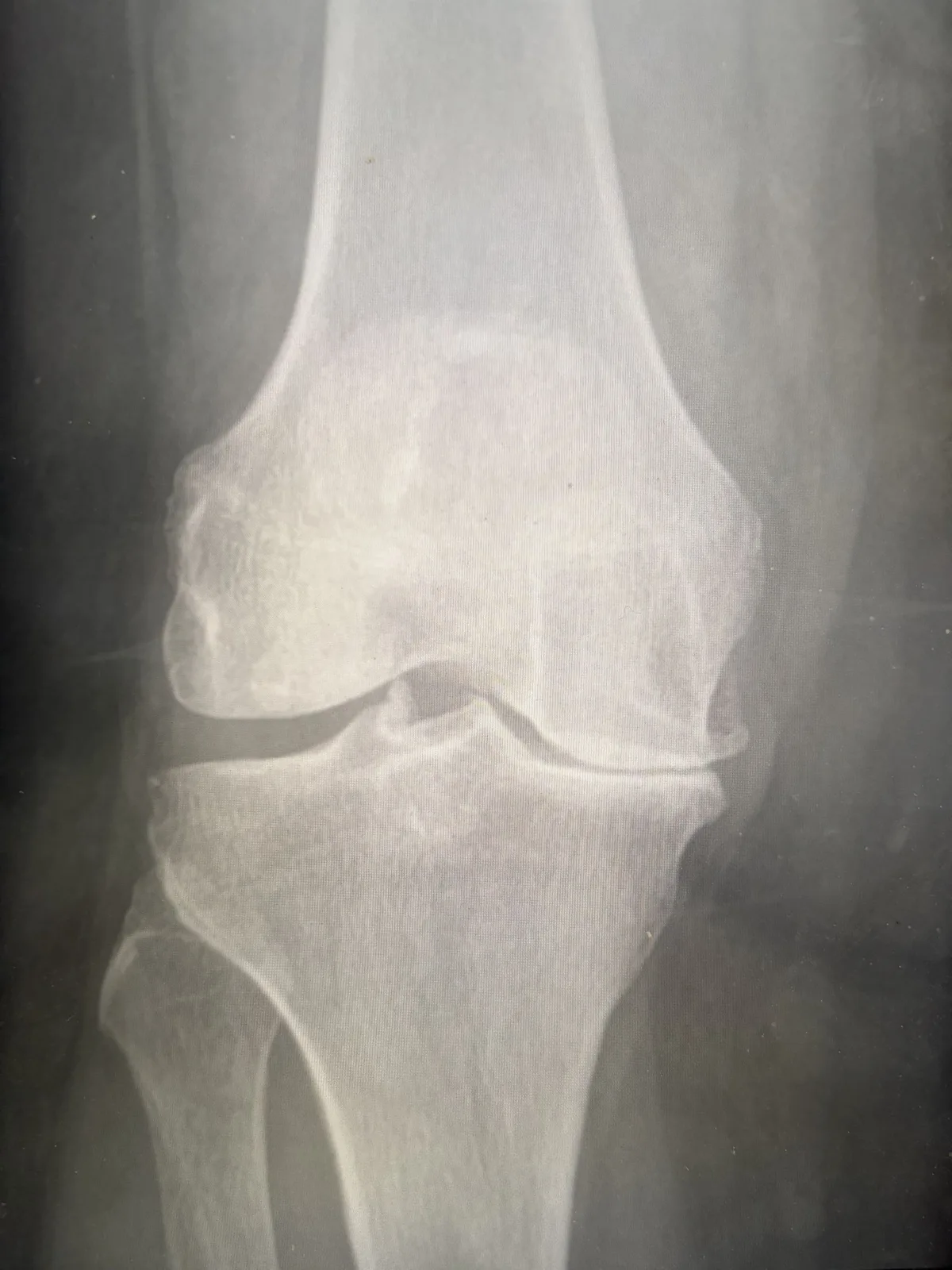
Here Are Some Examples of Knee Replacement Surgery X-Rays
X-rays from Mr Edmondson’s practice: a knee with arthritis before surgery, and a knee after a total knee replacement.


Patient Story
“Mr. Edmondson was very informative and explained the process from beginning to end I felt in good hands and fully confident that my procedure would be a success.”
Anonymous feedback, Montefiore Hospital
Book a consultation
Clinic Times
Mon
Nuffield Haywards Heath, 8:30-17:30
Tue
Spire Montefiore, Hove, 8:00-17:30
Fri
Nuffield Haywards Heath, 10:30-13:00