



What causes a painful joint replacement?
A painful joint replacement is a very specialised area of practice, since previous surgery often distorts the anatomy, and the bone that holds the implant in place may have been lost or damaged. Causes include wear and loosening of the components over time, infection (sometimes at the skin level, occasionally deeper within the joint), instability or dislocation, and a fracture in the bone around the replacement. Avascular necrosis (AVN) in the surrounding bone can also contribute to loosening in some cases.
Common symptoms
- Pain that develops or returns after a period of feeling well
- Stiffness or a reduced range of movement compared with before
- A feeling of instability, catching, or the joint giving way
- Swelling, warmth or fever, which can suggest infection
- Sudden pain and inability to weight-bear, which can suggest a fracture around the implant
How it is diagnosed
Assessment usually includes a full history of your original surgery, examination, and up to date X-rays, with CT where needed to assess bone loss in more detail. Blood tests or joint sampling are arranged if infection is suspected. Getting the diagnosis right matters, since the cause determines everything from simple monitoring through to complex revision surgery.
Your treatment options
Monitoring
Some problems are watched carefully with regular X-rays rather than treated immediately.
Revision hip surgery
Specialist care when a previous hip replacement wears, loosens, becomes unstable or fails. See Revision Hip Surgery, including an example of a failed hip needing urgent revision.
Revision knee replacement
Specialist care when a previous knee replacement wears, loosens or fails. See Revision Knee Replacement.
Trauma surgery
For fractures around an existing hip or knee replacement. See Trauma Surgery.
When should I seek help?
If a previous hip or knee replacement has become painful, stiff or unstable, it is worth having it assessed, even if the change has been gradual. Early assessment means more options remain open, and not every painful replacement needs revision surgery.
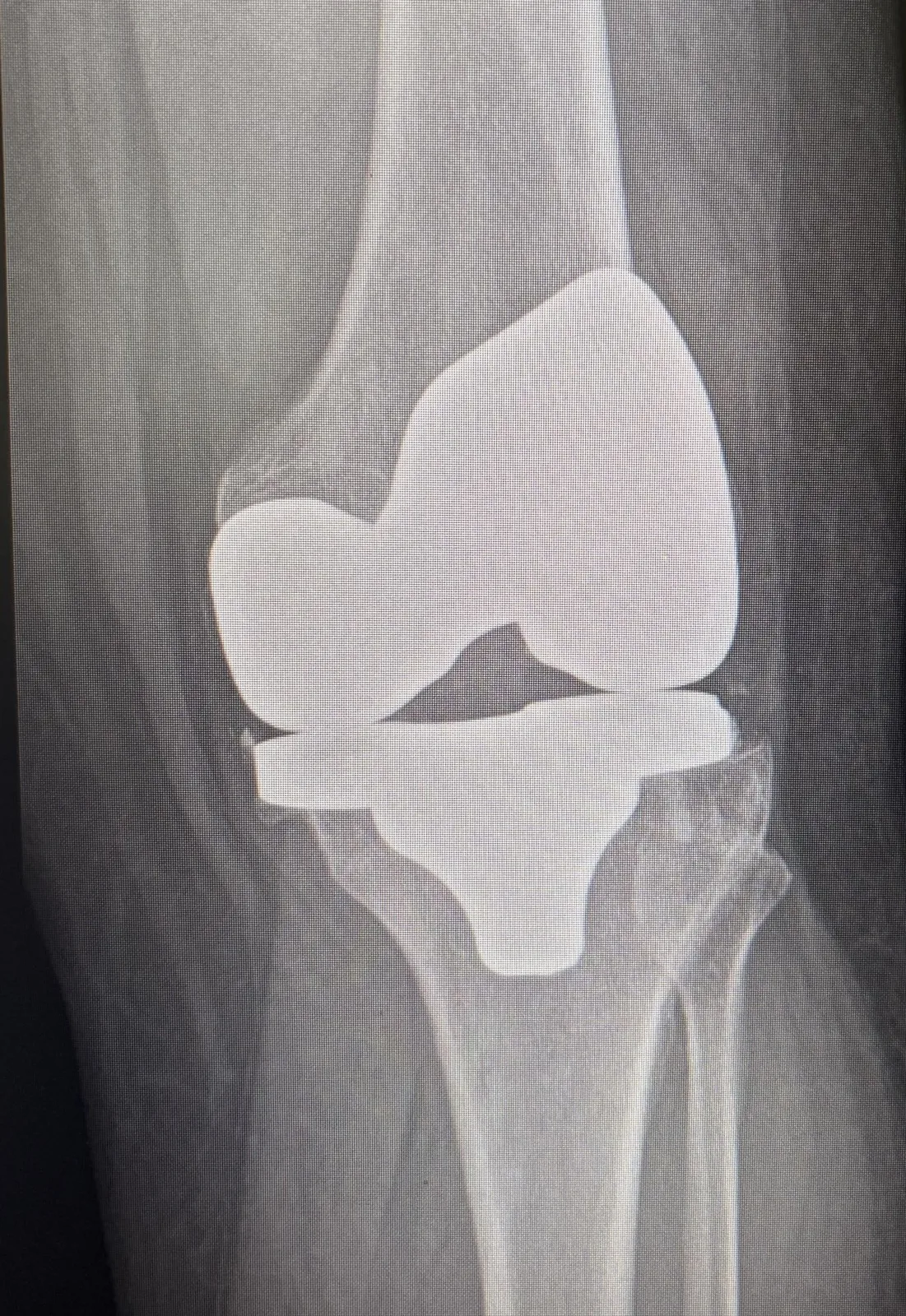
Example of a Failed Knee Replacement X-Ray
Get assessed
Treatment Options
Good to know