


What causes sacroiliac joint pain?
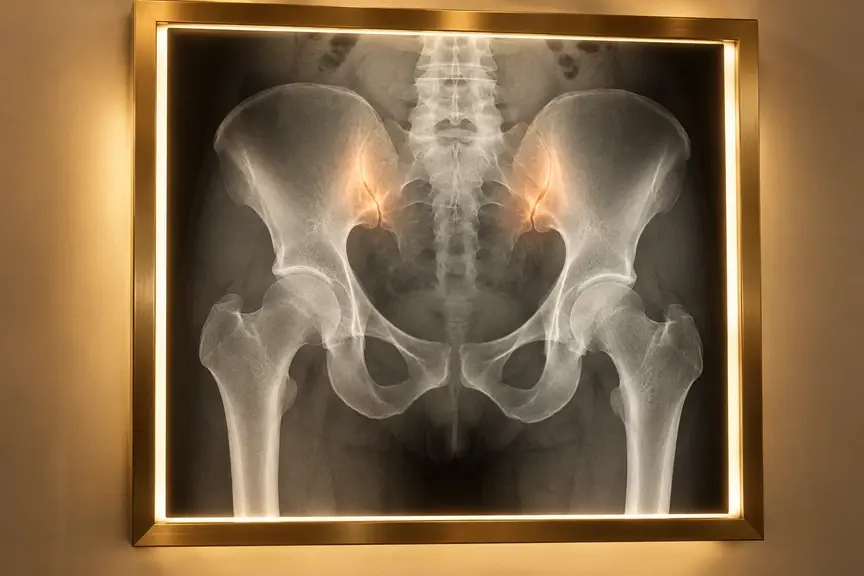
The sacroiliac joint sits between the sacrum (spine) and the pelvis. Like any joint, it can be irritated by arthritis or by abnormal movement. Arthritis affecting this joint includes osteoarthritis, and inflammatory conditions such as ankylosing spondylitis and other seronegative arthropathies linked to bowel, skin or eye conditions. Abnormal movement or pressure at the joint can also occur if one leg is longer than the other, whether from developmental reasons or previous surgery, from generalised ligament laxity, or following a previous pelvic injury.
Common symptoms
- Pain in the lower back, just to the side of the midline, at the level of the buttocks
- Pain that can radiate down the back of the thigh to the knee, and rarely to the side of the calf
- Pain occasionally felt in the groin
- Pain aggravated by standing on that leg alone, or going up and down stairs
How it is diagnosed
Your consultant will take a history of the pain and examine you using special provocative tests to elicit the symptoms. X-rays and occasionally bone scans and MRI scans are requested to help pinpoint the problem and exclude other joints that can mimic the pain.
Your treatment options
Joint injection
An injection into the sacroiliac joint helps confirm or refute the diagnosis, since pain relief afterwards suggests this is the problem joint. It can also give longer term relief, sometimes up to six weeks.
Anti-inflammatory medication
Where the condition is purely inflammatory, this can be managed with anti-inflammatory medication and injections.
Physiotherapy
Offered for milder cases with girdle weakness.
Sacroiliac joint fusion
Considered if physiotherapy fails in the long term, or the condition is more severe. See Sacroiliac Joint Fusion.
When should I seek help?
If low back and buttock pain is limiting your daily life, and simpler measures have not helped, it is worth a conversation. Getting the diagnosis right is the most valuable step, because it is what makes the treatment that follows work.
Get assessed
Treatment Options
Good to know