


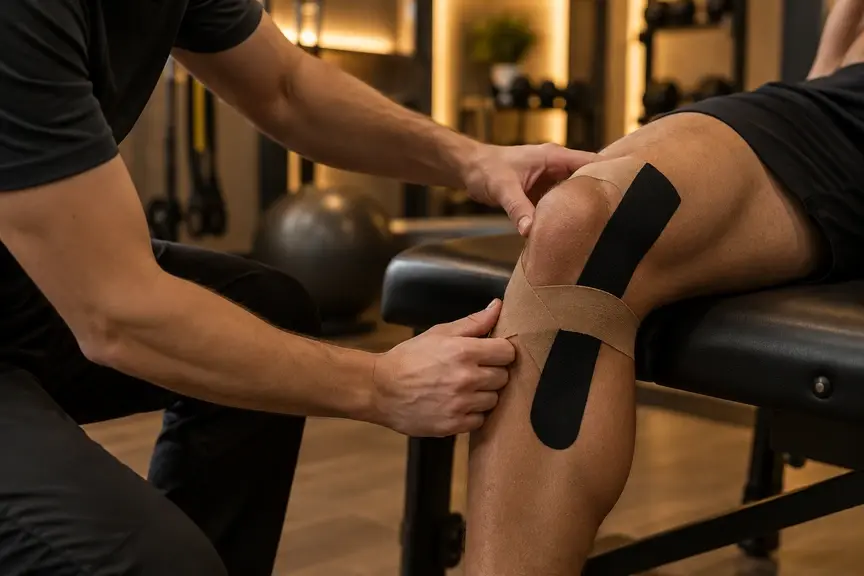
What causes sports injuries?
Sports injuries to the hip and knee commonly include meniscal tears and ligament injuries from a sudden twist, loose fragments of cartilage or bone following an impact, and fractures from falls or collisions. Repetitive impact sports such as running, rugby, football, hockey, martial arts and skiing can also accelerate wear in the hip or knee over time, sometimes leading to earlier arthritis.
Common symptoms
- Sudden pain, swelling or an audible pop at the time of injury
- Instability, or a feeling that the joint will give way
- Locking or catching that prevents the joint moving freely
- Difficulty weight-bearing immediately after a fall or collision
- Persistent pain or swelling that does not settle with rest
How it is diagnosed
Assessment starts with a history of how the injury happened and an examination of the joint. X-rays check for fractures, and an MRI shows soft tissue injuries, meniscal tears, ligament damage and cartilage injury in detail. For suspected fractures, X-rays and sometimes CT scans confirm the pattern of the break and guide whether surgery is needed.
Your treatment options
Lifestyle & physiotherapy
Rest, activity modification and targeted rehabilitation are enough for many soft tissue injuries.
Knee arthroscopy
Keyhole surgery to treat meniscal tears, loose fragments and other mechanical problems, usually as a day case. See Knee Arthroscopy.
Trauma surgery
Surgical fixation of fractures, allowing earlier weight bearing and a faster return to function than traditional casting. See Trauma Surgery.
When should I seek help?
If a sports injury causes ongoing pain, swelling, instability or locking, or if you’re unable to weight-bear after a fall or collision, it is worth being assessed promptly. Some injuries need urgent attention, others can be safely assessed at a routine consultation, and Mr Edmondson can advise which applies to you.
Get assessed
Treatment Options
Good to know