


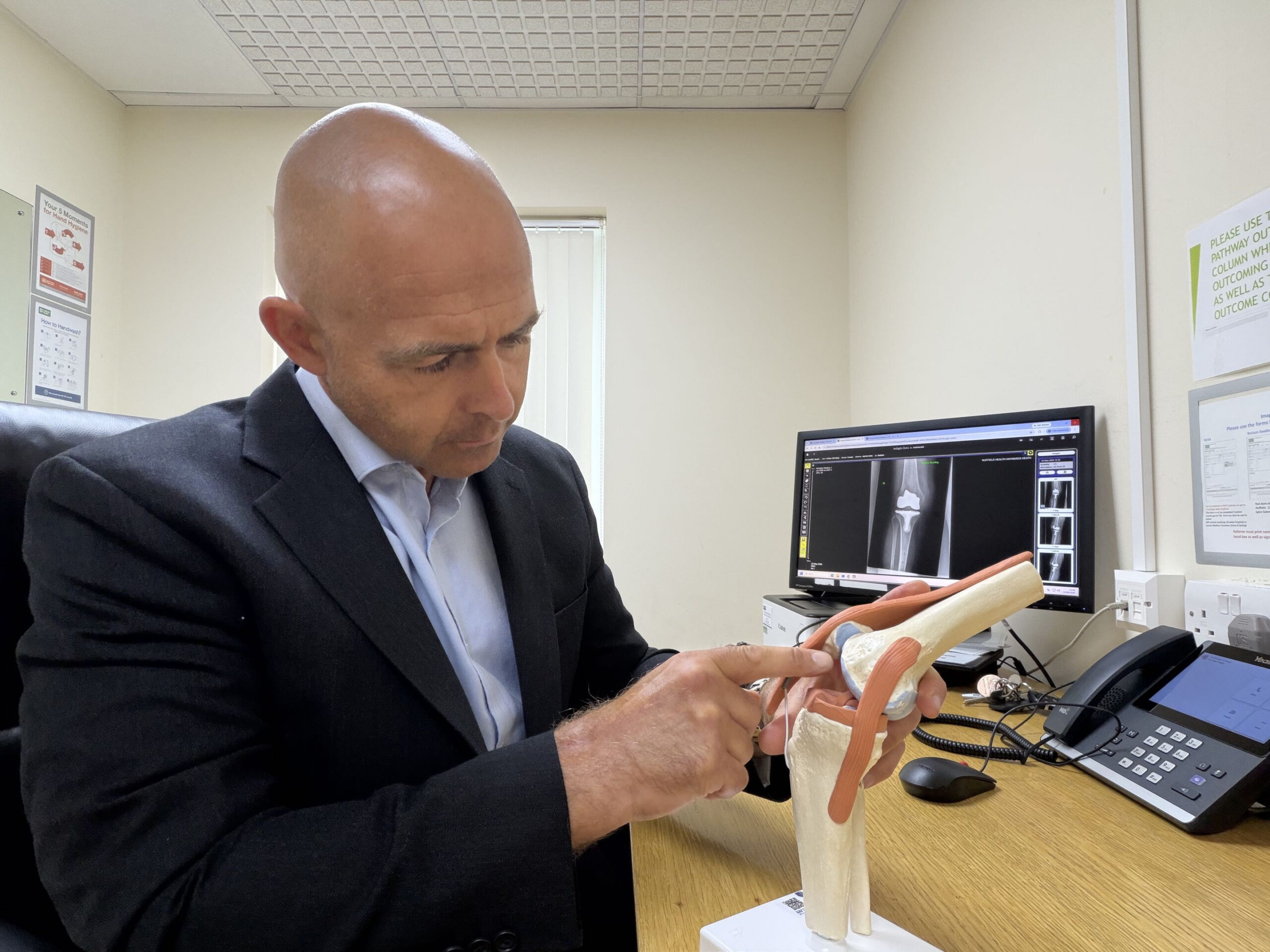
What is a revision knee replacement?
Revision knee surgery is a very specialised area of practice. It involves removing a previous knee replacement and replacing it with new components. It is more demanding than a first replacement, because the anatomy can be distorted by earlier surgery, and the bone that holds the implant in place may have been lost or damaged. Depending on the problem, this can mean exchanging the plastic bearing only, or rebuilding the joint with specialist implants, stems, augments or bone graft to restore support.
It has always been believed that the first attempt at a joint replacement is the best, and Mr Edmondson still holds firmly to the view that the first shot is the best shot. But if a knee replacement has gone wrong, for whatever reason, then revision surgery becomes necessary. Fortunately, as surgical techniques, instruments and implants have improved in recent years, the majority of revision surgery now yields excellent, long lasting results.
- There are several reasons a knee replacement may need revising, including:
- Loosening or wear of the components over time
- Chronic infection, sometimes treated in two separate stages
- Debris or wear particles from the bearing surfaces
- A fracture in the bone around the replacement
- Stiffness or instability that limits the knee
Is a revision knee replacement right for me?
Revision is considered when a replaced knee becomes painful, stiff or unstable, or when scans show wear, loosening or infection. Timing depends on the cause, your bone quality and your general health. Some problems are watched carefully with regular X-rays, while others are best addressed sooner, and this is discussed openly with you. Assessment usually includes a full history of your original surgery, examination, up to date X-rays with CT where needed, and blood tests or joint sampling if infection is suspected.
What happens on the day of surgery?
Because the anatomy and bone have often been affected by the first operation, revision requires specialist surgery, equipment and prosthesis. Depending on the cause, it may be done in one stage or two. Surgery usually takes longer than a first replacement, under spinal or general anaesthetic. Antibiotics are given around the operation and samples may be sent to the laboratory. The plan is prepared in advance, and your recovery is guided step by step from the day of surgery. Hospital stays after revision are often a little longer than after a first knee replacement.
Your Recovery, Week by Week
Day 1
Walking with support, a slightly longer stay.
Weeks 1-2
Gentle walking indoors, wound and X-ray review.
Weeks 4-6
Gradual return to light activity and driving.
Months 3+
Fuller activity over months, guided individually.
Risks and honest conversations
Revision surgery carries more risk than a first replacement, which is exactly why experience and planning matter. Mr Edmondson talks through the risks specific to your knee and the steps taken to reduce each one. No promises are made about outcomes, and that honesty is part of the care.
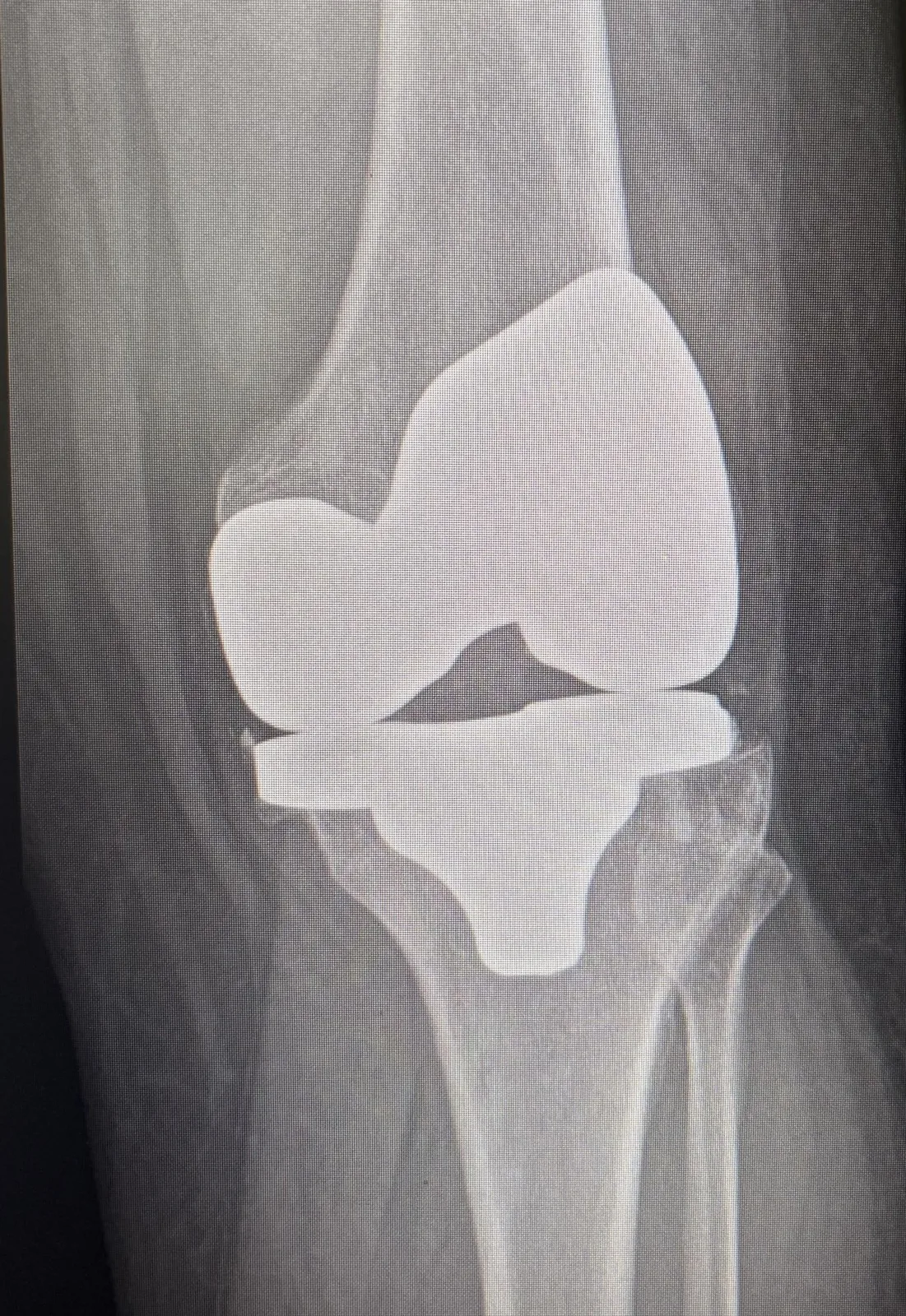
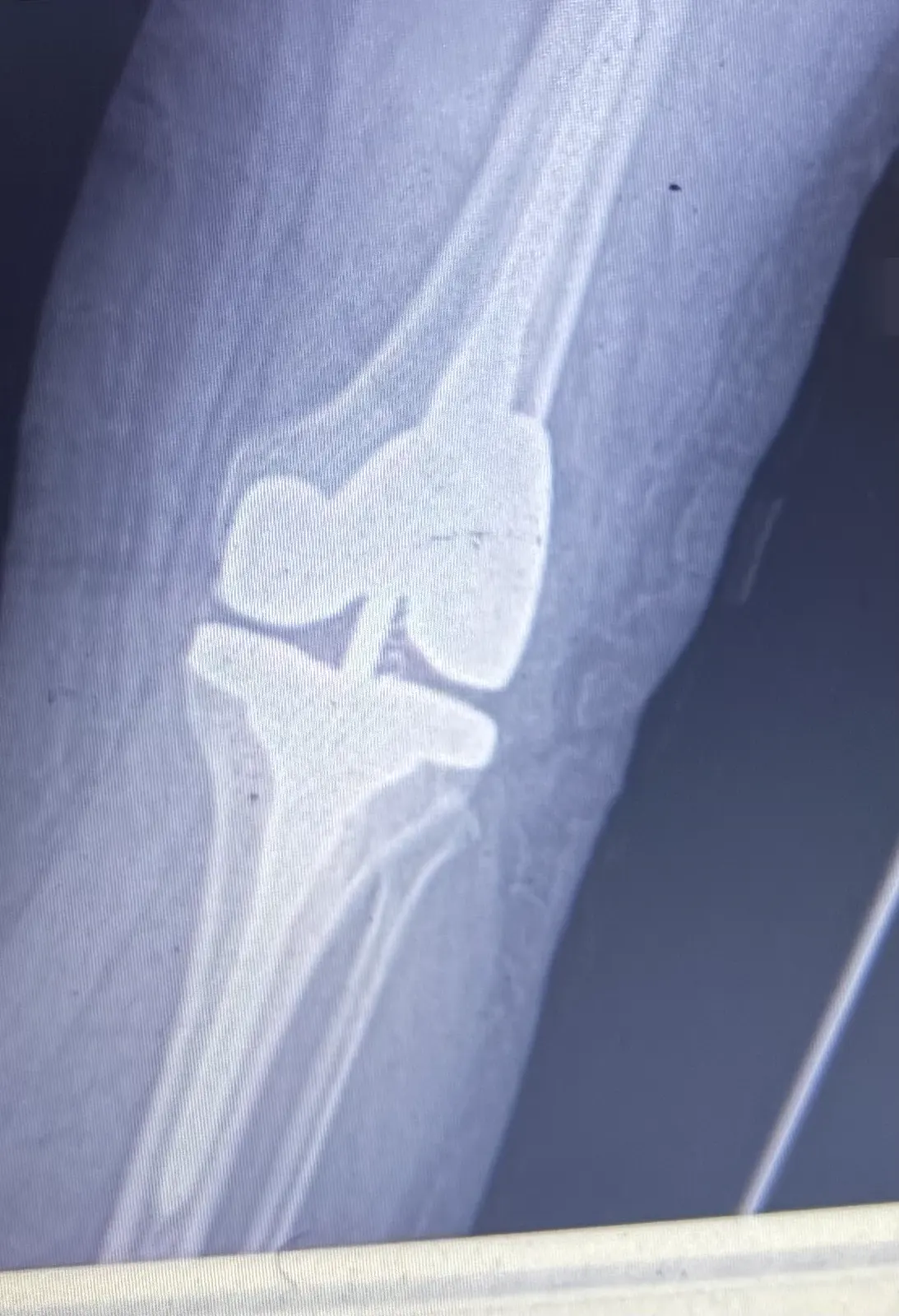
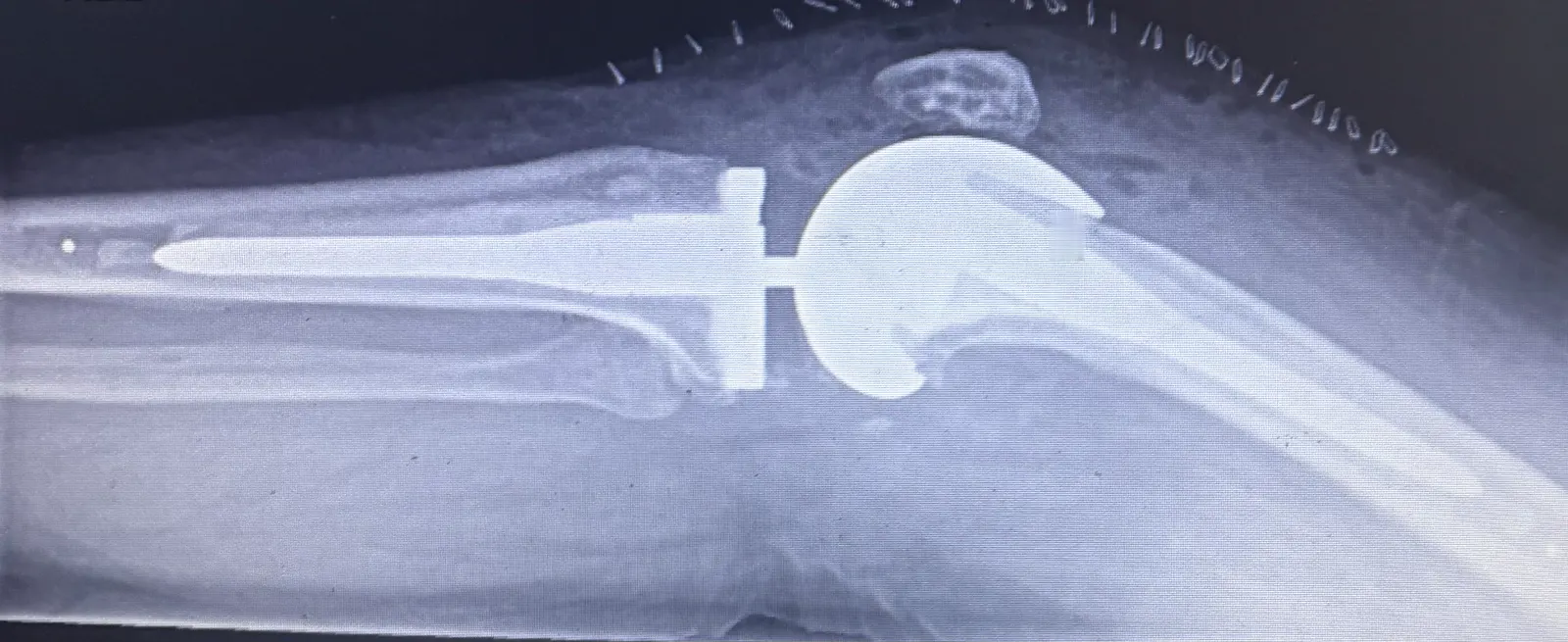
Here Are Some Examples of Revision Knee Replacement X-Rays
Patient Story
“Mr. Edmondson was very informative and explained the process from beginning to end I felt in good hands and fully confident that my procedure would be a success.”
Anonymous feedback, Montefiore Hospital
Book a consultation
Clinic Times
Mon
Nuffield Haywards Heath, 8:30-17:30
Tue
Spire Montefiore, Hove, 8:00-17:30
Fri
Nuffield Haywards Heath, 10:30-13:00